On the Brink: How Escalation Between Israel and Iran Could Ignite a Global Conflict

The world is edging closer to a global conflict—potentially even a nuclear one—than many imagined possible just months ago. At the center of this escalation is Israel, whose increasingly aggressive posture in the Middle East is pulling major powers toward confrontation. The latest chapter in this volatile saga unfolded earlier this week, when Israel launched airstrikes on Iranian territory, marking a dangerous expansion of a conflict that already spans Gaza, the West Bank, Lebanon, Syria, Iraq, and Yemen.

These strikes come amid Israel’s ongoing military campaign in Gaza and the West Bank—a conflict that has resulted in immense human casualties and billions of dollars in property damage. Now, with Iran in its crosshairs, Israel claims it faces a narrow window to eliminate what it calls an “existential threat”: Iran’s nuclear program.

But the Iranian response was swift and forceful. Israeli efforts to destroy key Iranian nuclear facilities—particularly those in Natanz and Fordow—have reportedly fallen short. The Fordow site, buried more than 500 meters under a mountain, remains intact, and Israel lacks the weapons necessary to breach such fortified bunkers. Specifically, it would require the GBU-57 “bunker buster” bombs, which only the United States possesses.

Former U.S. President Donald Trump, who is again asserting a hardline stance on Iran, has threatened direct action in support of Israel, demanding Tehran’s unconditional surrender. This demand has been flatly rejected by Iran’s Supreme Leader, Ayatollah Khamenei. While some analysts interpret Trump’s rhetoric as a negotiation tactic, similar to previous instances during his presidency, Iran has made clear that it will not return to the negotiating table while under military assault.

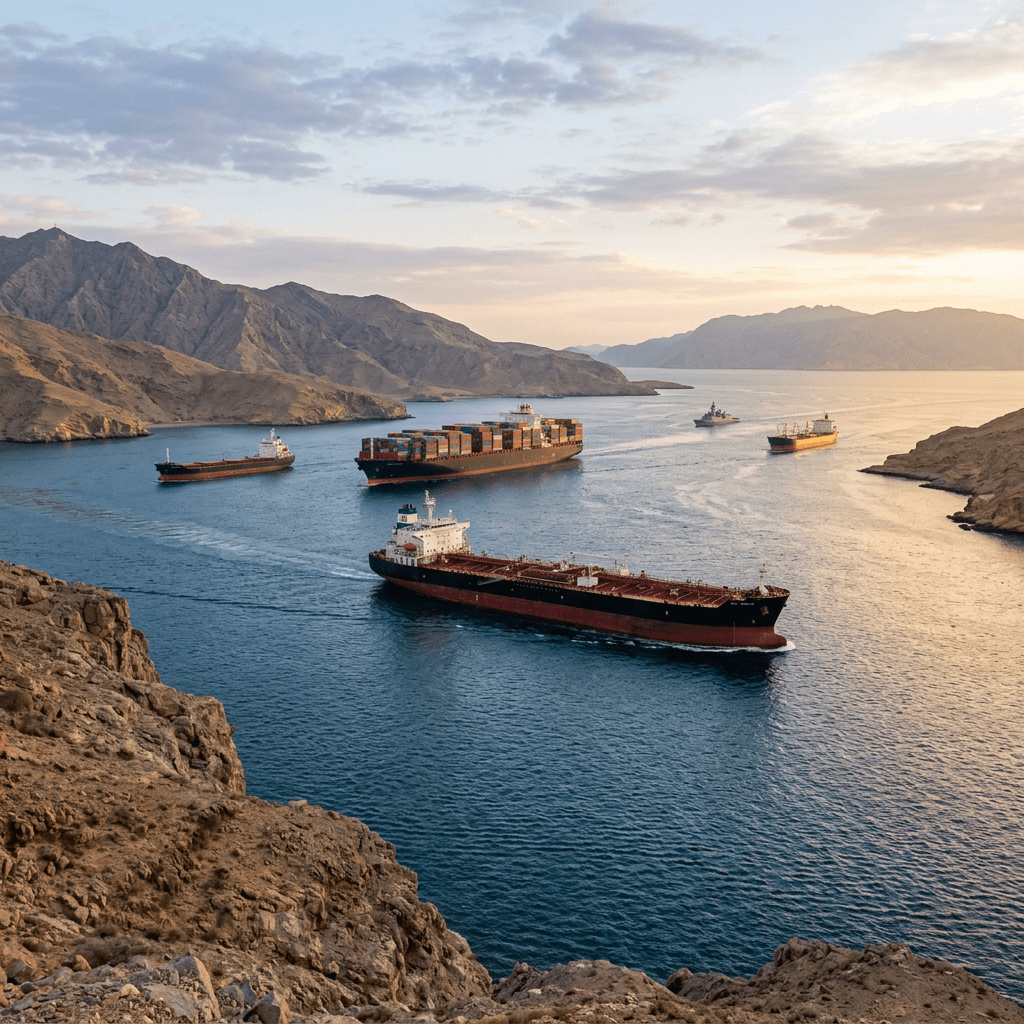
Should the United States enter the conflict directly—whether by supplying bunker busters or launching strikes of its own—it would mark a turning point with potentially catastrophic consequences. A U.S.-Israel axis would likely trigger regional retaliation from Iran-aligned forces such as Hezbollah in Lebanon, Kataib Hezbollah in Iraq, and the Houthis in Yemen. Iran itself has threatened to retaliate against U.S. bases across the region and could move to close the Strait of Hormuz, a strategic chokepoint through which roughly one-third of the world’s oil supply transits. Its closure would spark a global energy crisis and severe economic disruption.

Beyond the Middle East, other global powers could be drawn into the fray. Russia and Iran have signed a comprehensive security agreement and are already cooperating militarily, particularly in the context of the war in Ukraine. Iran supplies Russia with Shahed drones used against Ukrainian targets—an alliance that may be tested further if Iran comes under U.S. attack. Meanwhile, China has issued its harshest condemnations yet against Israel’s actions, calling them dangerously provocative. Pakistan, which shares a long border with Iran and maintains close ties, could also become entangled in a broader regional war.

The Gulf states—including Saudi Arabia, Qatar, Oman, the UAE, and Bahrain—are likely to be affected regardless of their intentions. Hosting U.S. military installations, they would almost certainly be targeted in any Iranian retaliation against American forces.

Europe, too, would not remain neutral. Countries like Britain, France, and Germany have already affirmed Israel’s right to self-defense, and would likely align with the U.S. in any extended conflict with Iran.

All of this points to a sobering reality: a scenario where multiple nuclear-armed powers—namely the United States, Russia, China, the United Kingdom, France, Pakistan, and Israel (which maintains a policy of ambiguity about its nuclear arsenal)—are involved in a high-stakes confrontation. The risk of miscalculation, accidental escalation, or deliberate nuclear use has arguably never been higher in the 21st century.

So where do we go from here?

At present, two paths remain. The first is the path of war—likely the more immediate one. Israel, unable to neutralize Iran’s nuclear sites on its own, may compel the U.S. to act militarily. Such a development would draw in regional and global actors, potentially triggering World War III.

The second path is a negotiated settlement. But that too appears increasingly remote. Iran has stated unequivocally that it will not negotiate under threat, while Israel views any compromise on Iran’s nuclear ambitions as unacceptable. In this zero-sum equation, diplomacy is losing ground to brinkmanship.

With Iran’s top military leaders reportedly targeted and killed in Israeli strikes, and both sides unwilling to compromise, the world stands at the edge of a precipice.

The decisions made in the coming days will determine whether this is a temporary crisis—or the beginning of a war that engulfs the globe.


Title: Teargas and Tuxedos: A Nation Divided as Budget Meets Protest


The simultaneous occurrence of two starkly different events on the same day—Finance Cabinet Secretary John Mbadi reading the 2025/2026 budget estimates and protesters demanding justice for slain teacher Albert Ojwang—offers a haunting snapshot of Kenya’s fractured state.

As national television broadcast a split-screen of the day’s events, the contrast was jarring. On one side, well-dressed officials in tailored suits paraded with the iconic budget briefcase. On the other, tear gas filled the streets, water cannons raged, and young people—angry, unemployed, and disillusioned—clashed with riot police. It was more than symbolic. It was a brutally honest depiction of two Kenyas: one of privilege and power, and another of pain and protest.

To many, especially the youth, the budget announcement was irrelevant—if not insulting. Rather than addressing the core crisis of unemployment and social inequality, the budget is widely perceived as a continuation of the very system that has failed them. Grand figures and lofty projections do little to alleviate the hopelessness that defines life for many young Kenyans. In fact, these estimates are often seen as enablers of entrenched corruption, giving cover to the deals and kickbacks that enrich a few at the expense of the many.

The government’s tone-deafness to public sentiment—especially on a day when citizens were mourning and mobilizing over a senseless killing—only widens the chasm. The state’s priority seemed clear: fiscal pageantry over human life, optics over justice.

If there was ever a moment that captured the urgent need for reform, unity, and empathy from our leaders, it was this one. The budget may have been read, but the message from the streets was louder.


Kenya: A Democracy Without Democrats

In theory, Kenya is a democracy. In practice, it is anything but. The state-sponsored abductions, extrajudicial killings of government critics, and the violent suppression of peaceful protests are not the signs of a functioning democratic state. They are hallmarks of a regime sliding deeper into authoritarianism—cloaked in democratic clothing.

What passes for governance in Kenya today is an elaborate performance: constitutionalism in form, lawlessness in practice. Senior government officials routinely flout court orders with impunity. Institutions designed to provide checks and balances are sabotaged or subverted. Meanwhile, the ordinary mwananchi faces the full weight of the law for the smallest infraction, while those in power loot the nation with breathtaking audacity. This is not democracy; it is rule by the politically untouchable.

The political elite, across the aisle, have demonstrated time and again that they hold no allegiance to the people. Their loyalties lie not with the voters but with their parties—and, more often, with their personal fortunes. There are members of Parliament who openly declare they owe their loyalty to the party and not to their constituents. What do we call such betrayal, if not treasonous?

This contempt for the electorate has become structural. Legislative proposals, whether from the ruling party or the opposition, seldom serve the public good. Instead, they often reek of opportunism, foreign interests, or outright malice. It’s as if our leaders are governed by some distant hand—certainly not by the needs or voices of ordinary Kenyans.

The June 2024 protests should have been a wake-up call. For the first time in decades, Kenyans stood united, undivided by tribe or political affiliation. They had had enough—of arrogance, corruption, and betrayal. That unity, though brief, was profound. It showed that when Kenyans stand as one, even the cynical tribal arithmetic of the ruling class collapses under its own weight.

Yet what has Parliament done since? Nothing. Or worse—passed legislation that further alienates and impoverishes the very people they claim to represent. Kenya’s 13th Parliament may be the most unrepresentative and compromised in our history. It is a house teeming with political profiteers—people who speak often, loudly, and emptily. Many are guided not by principles but by appetites: for power, for wealth, for impunity.

Worse still is the moral decay. Party-hopping, once considered a political sin, is now practiced openly and shamelessly. Politicians who derided rival parties just weeks earlier switch sides with the agility of circus acrobats—not out of ideological conviction, but to position themselves closer to the national treasury. This is not strategy; it is political harlotry.

Meanwhile, the contrast between the elite and the people is a study in cruelty. As politicians amass obscene wealth, the majority of Kenyans remain trapped in grinding poverty. Their pain is visible, their struggles daily. Yet their voices are muffled by a political class more concerned with flamboyant displays of privilege than public service.

And make no mistake: this government—like many before it—is more afraid of a politically conscious citizenry than it is of foreign debt or economic collapse. That’s why it downplays protests, distorts the truth, and dismisses critics as enemies of progress. It is a government out of touch, out of ideas, and soon, if Kenyans act, out of time.

But change will not come by mere resolutions, or by clinging to ballots alone. Democracy is not only about voting; it is about vigilance, voice, and action. We must reject the pacifism of the past that mistook silence for peace. Real peace is founded on justice—and justice demands confrontation with the status quo.

We must call things by their true names. Kenya is not suffering from a leadership deficit—it is suffering from a democratic fraud. And until we replace career politicians with citizen leaders, replace fear with courage, and replace tribal loyalty with national unity, we will remain captives of a system that serves itself first.

The time to act is now. Not just at the ballot box, but in the streets, in the media, in every community meeting. Let the political class hear what they refuse to see: that Kenya is not their inheritance. It belongs to its people—and they are waking up.


Op-Ed: In Global Politics, You’re Either at the Table — or on the Menu

“If you’re not at the table in the international system, you’re on the menu.”
These were the words of former U.S. Secretary of State Antony Blinken at the 2024 Munich Security Conference — a strikingly candid admission of the brutal calculus that defines international politics. In saying the quiet part out loud, Blinken exposed a truth often dressed up in the language of democracy, human rights, and international law: the global order is not guided by morality, but by power, interest, and the pursuit of dominance.

The world today is not a harmonious community of nations. It is a high-stakes competition — a rat race — where a select few wealthy and militarily powerful countries compete for global supremacy. Fair play is idealized, but rarely practiced. More often, it is coercion, manipulation, and the strategic use of force that determine outcomes. In this reality, smaller or less powerful nations are not just sidelined — they are frequently the collateral damage.

At the center of today’s geopolitical contest is the escalating rivalry between the United States and China, two superpowers locked in a complex struggle for economic, technological, and military dominance. Russia remains a factor, though its global clout has waned compared to its Cold War-era influence. Yet the field is not limited to these giants. Several regional powers — including Iran, Israel, Saudi Arabia, and Turkey — are staking out increasingly assertive roles within their spheres of influence. They may not yet be vying for global hegemony, but their actions suggest a growing appetite for strategic autonomy and regional dominance.

This is the unvarnished nature of global politics: a system in which national interest trumps principle, and where alliances are formed not out of shared values but out of mutual benefit or shared threats. The rhetoric of democracy versus dictatorship is often little more than a smokescreen. In practice, both democratic and authoritarian states alike engage in the same zero-sum competition for influence and advantage.

The consequences for countries not “at the table” are profound. These nations often find themselves at the mercy of shifting alliances, proxy wars, and economic coercion — their sovereignty compromised, their futures shaped not by their own aspirations, but by the interests of others.

Understanding this reality is not a call for cynicism, but for clarity. If the global system is to be reimagined as more equitable and cooperative, we must first acknowledge what it truly is: a contest of power. Only then can we begin to ask whether a different kind of table is possible — one where more nations have a real seat, and fewer are served up as the main course.


Opinion: The Myth of African Unity

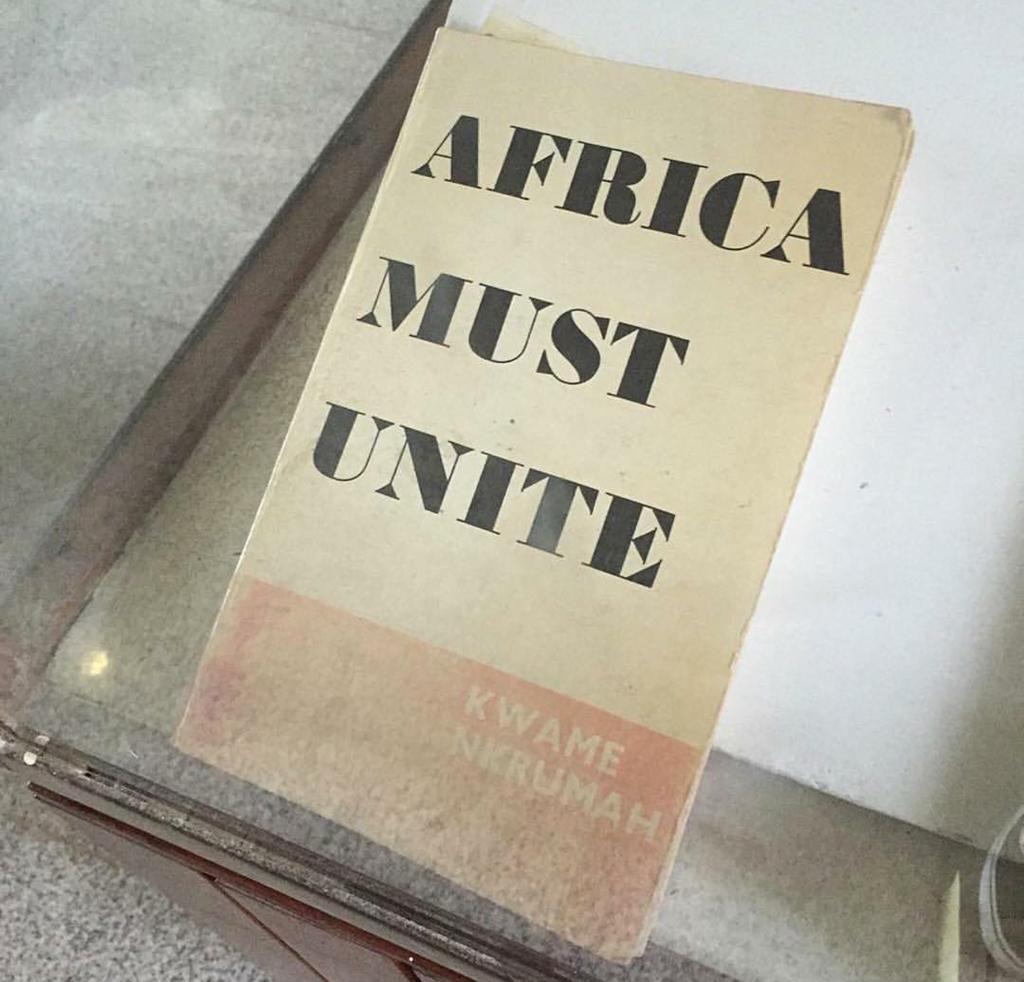
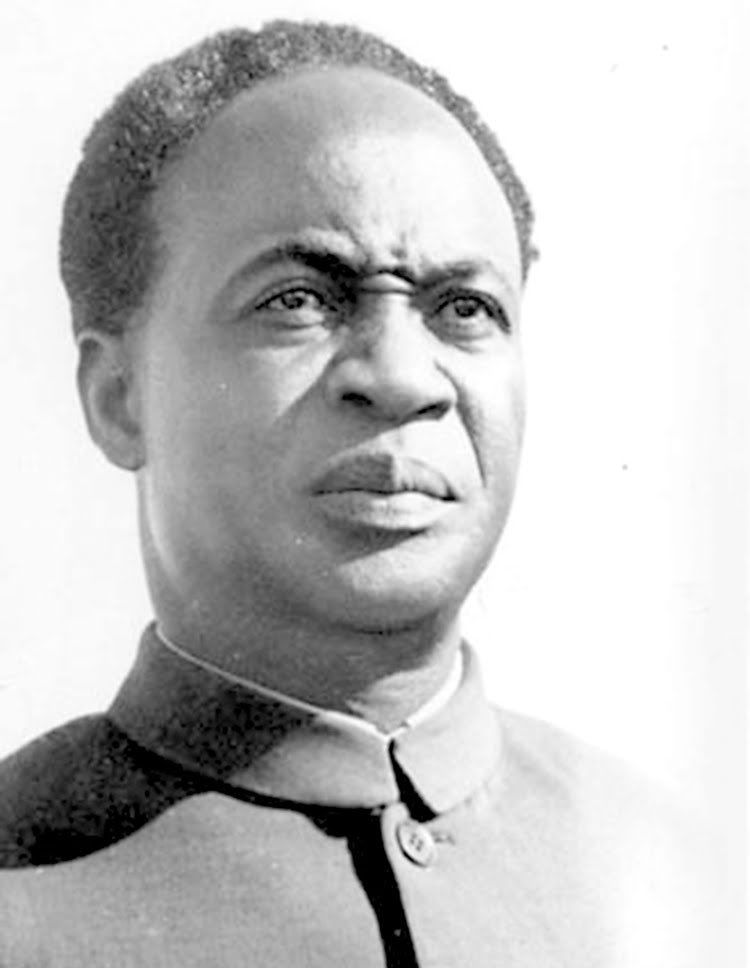
Kwame Nkrumah,a great Pan-Africanist and the first president of Ghana, penned down an interesting and a famous book among leaders and “Pan-Africanists” alike titled “Africa Must Unite.”  In this book, Nkrumah passionately posits that the only feasible path to Africa’s development will be through unity. In other words, without Africa’s unity there will be no development in the continent. Decades later,it appears that he has been ostensibly proven right.  Although the continent has made a few steps forward, they are minute and not commensurate to the time and resources put forward.

This idea of African Unity has been continuously parroted by all and sundry since the early days of independence but till today little to no progress has been made in this direction. Movement of goods and people across the colonially imposed borders is still difficult. Air travel between different African countries is still ludicrously expensive. All African countries infrastructure still looks outwards rather than inwards and traveling outside the continent is still cheaper than traveling within the continent just to mention a few. Dubious leaders and self-proclaimed Pan-Africanists have been using this mantra in every single occasion for their own gains and the deluded masses applaud without asking salient questions about it. What does a united Africa look like? How is the unity to implemented? How will it work? How will the numerous differences between states and regions be successfully countered? Will it be like the European Union or the American system or something absolutely different?No one asks. It just a beautiful rhetoric intended to please the gullible.

Nkrumah is the only leader who had a vision and a strategy to accomplish the task of uniting post-colonial Africa. His main strategy which fell short after 1963 with the creation of the Organization of African Unity (OAU) was the alliance which he forged together with Modibo Keita of Mali and Ahmed Sekou Toure of Guinea. These three countries were to have a unified foreign policy and a common currency and to be the base for a real and practical African Unity. None of which ever happened. Other countries were to join after gaining their independence or at their own convenience. This was a viable idea but Nkrumah and his comrades underestimated the power of vested colonial and post-colonial interests. Colonial powers fought both directly and clandestinely to thwart any emergence of a real united Africa organization. There’s is no other worthy strategy which has been put in place since that I know of. The African Continental Free Trade Area (AFCFTA) will not create a united Africa in the sense of what Nkrumah envisioned with a common currency, borderless and with a unified foreign policy and a common defense policy, which is what is really needed. Even the African Continental Free Trade Area might fail to dully materialize by 2063 as stipulated in the document. Neocolonial interests abound. If the newly formed Alliance of Sahelian States ( AES) were to weather the endless storms they face and create an alliance with a unified foreign policy, a common defense policy and a common currency, then they will be following in the footsteps of kwame Nkrumah and his ilk. This might be the playbook they are using and the aim is to try to actualize Kwame’s original idea. All the other numskulls who parrot and sing about the unity of Africa without actually elaborating on how to achieve this are probably political opportunists just like the African leaders who go to the African Union meetings in Addis Ababa engage in silly rhetoric of unity every year without actually coming up with a plan.

I fully agree with Nkrumah though, unity is the best thing that can happen to this continent. Having said that, I see no way of uniting these countries other than by a military force Mao style ,which is entirely impossible of happening. My solution is that since the continent can only be effectively united by a military action which is unlikely to happen, let them be but with a fierce military competition like that of Europe. This military competition will absolutely force the African countries to intently develop their economies and militaries keeping in mind that without that potential adversaries will gobble up their territories. This will also solve the problem of the many tiny politically and economically unviable countries which will probably cozy up to big the powers or get merged with bigger ones all together through diplomacy or force. This will be good for the economy of the continent as a whole. Suggesting this because all else have failed miserably. Currently, African states are very much engaged in fighting their own populations, fierce military competition will force them to work and develop their own populations and economies as a means of survival and to focus outward. It is simply a redirection of the fight, nothing much. What is going on is a vicious competition among the states- a  competition for mediocrity but a competition nonetheless.

Africa has never been united in its entire history. This is why it was conquered and colonized in the first place. There must be a logical reason for the continued lack of unity. There are over 3000 tribes which with growing numbers will become nations in themselves. To go forward, history must be put into consideration. Uniting a continent as huge as Africa (30.37 million square kilometers) is almost entirely impossible. So to postulate that this massive continent can be united can both be refuted by history and by logic. The vicious military competition which is being proposed here is what really led to the European continent to have exponential growth around the 19th century. They competed in every aspect of life including in participating in slavery and colonialism. Each of them compete savagely to get a piece of the cake. It is time for African countries to try other measures since the quest for unity has failed. The late Nelson Mandela once said in an interview that it did not matter whether the cat was black or white as long as it can catch the mice. African countries should now focus more on catching the mice and not on petty politics of the processes or methodologies.

The opponents of this military competition will obviously cite the idea that this is basically warmongering. That the casualties in such scenarios will be considerably high and it will be disastrous to the continent. That this is unfair and totally wrong. I want to unequivocally state that war is always with us even though it is wrong and unfair. It is a companion that never leaves. There’s a war in Congo and another one in Sudan. Most countries are fighting terrorism in the Sahel while others are embroiled in circles of neverending internal turmoils. African history is ladened with cases of genocides and ethnic cleansing. History of some of the most successful countries today point to a time when they had to put their plan in motion and it was indeed absolutely bloody. China for instance during the long march. China is now on the pinnacle of the world. My idea is to simply change the course of it from internecine conflict characterized by civil war and intertribal clashes to a more beneficial warfare. This might sound utterly ironical but some warfare are somehow beneficial.

Africa: The Only Way

Africa and poverty are almost synonymous. It is virtually impossible to mention Africa without poverty coming to one’s mind. It doesn’t mean that the whole Length and breadth of the continent is poor. It is just a picture deliberately painted by foreign media to their audience to show that Africa is uncivilized and nothing good can come of the continent. Innumerable conferences and summits have been regularly convened to create a roadmap for lifting Africa and its people out of poverty. It is irrefutable to say that all these efforts have failed. It is appropriate to point out that conditions have only deteriorated overtime but the ” experts” keep on coming with other futile ways to experiment on this continent. As things stand, this cycle will continue in perpetuity. And so I ask, how can a continent with a vast wealth of mineral resources, leave alone large tracks of fertile agricultural land and a vibrant population be termed as poor? All this is brought about by incessant economic and political manipulation.

Africa’s wealth leave the continent in cheap raw form and return as expensive manufactured goods. This is simply because Africa lacks the necessary technology, capital and machinery to process its raw materials locally and sell them expensively as manufactured goods. The owners of capital and technology lack the goodwill with which African leaders let them take resources to aid the continent in developing its own industries. How can Africans blame them when it is not in their interest to see Africa industrialize? Populations in their countries will loose jobs and their industries will grind to a halt. This means only one thing,they will strive very hard to deny Africa the opportunity to industrialize. Foreigners will go to inconceivable lengths to thwart industrialization in Africa. Africa’s resources are scattered and diverse. Almost as if each country was given just a part of what the continent needs for growth and industrialization. Different countries have different minerals which in some cases compliment each other. Some countries are endowed with fertile Soils while others are typically desert. How then can it be made to work?

Different countries with varying resources must come together to compliment each other to make Africa work. Working in isolation only makes it easy for imperialists to exploit Africa as they have always done. Six decades after independence African leaders should have known better. They should have known that only one thing will work for the continent: UNITY. Countries with good agricultural land should be able to feed the continent with their produce. Agriculture in countries like Nigeria,Ghana,Kenya, Zambia, Tanzania should be improved through technology, funding and proper research to produce nutritional food for the wider continent. If China can feed its 1.4 billion people then Africa too can. After all, the difference in population is negligible. Regrettably, African economies are still looking outward rather than concentrating inwards the same way African leaders look to foreigners for help in almost everything. 60 years after independence, Africans still grow cash crops for European and Chinese industries. Coffee, cotton,cocoa name it. Kenyan and Ethiopian coffee can still be sold in Africa and be profitable. Ghanian cocoa can be sold anywhere in Africa and there still will be a deficit deficit. Why then do African countries grow cash crops for foreign industries?

African countries still grow cash crops for foreign industries because they lack a common market. Africans still grow cash crops for foreign industries because they still saddle themselves with needless borders imposed on them by colonial powers. The continent still lacks a common currency and a comprehensive transport network sixty years after independence. No African central bank in existence and electricity still is a major problem in almost all countries. Without creating these basics needs as Kwame Nkrumah warned no progress will be made. Only political unity will bring the continent out of this economic and social morass. An African Central Bank will come in handy in mobilization of the requisite resources needed to undertake capital-intensive projects across the continent. A good example is the proposed Inga Mega dam project in the Democratic Republic of Congo. In current estimates, the building of the dam requires a whooping $80 billion. DRC has been unable to marshal financial resources of this magnitude. It is always difficult and virtually impossible to mobilize such huge amounts of money as a country. This should be a continental project undertaken by all countries since power from this dam will approximately light 40% of the continent. With a working continental central bank, this ambitious project would have happened long time ago. Another project is a trans-African high-speed railway system to enhance faster movement of people and goods. You can as well add installation of solar panels in the Sahara desert. Remember only 1.2% of the Sahara desert is needed to be covered with solar panels to light the whole world. These are just a few examples of beneficial projects for Africans which can only be done in unity as a continent for the benefit of the people. Foreign financers cannot finance them because of the blowback in economic terms in their own countries. So Africa must unite to achieve the necessary capital to do these projects. I’m certain that as a united entity, finance will be available to undertake all these projects. Using foreign finances to finance projects in Africa only benefits the foreign countries and their people in terms of the high interest rates they charge on loans to the continent. Establishing an effective continental central bank will also save the continent from predatory high interest rates charged only on loans advanced to Africa. These can be as high as 20% while other countries in other continents borrow for the same institutions for as low as 2%.

African people are one people in terms of race,so why uphold the outmoded boundaries imposed upon us by the colonial powers? Without borders,and with a comprehensive transport network, onions produced in Niger can be sold in South Africa. Maize produced in Zambia can be sold in Nigeria and so on. This too will improve integration of the African people and promote ingenuity in production. Transport network in Africa is not fully developed and integrated. This is why it is easier to travel out of the continent than within. Africans are still stuck with outward looking infrastructure which aids in exports out of the continent. Individual countries trade with outside world more than they do among themselves. Most of the 54 nations in Africa are not viable. They either lack the technology and finance required for economic growth or lack the population which will be the market. In the same vein, they lack the much- needed capital and machinery with which to extract their minerals. In their desperation,they end up inviting foreign companies which exploit the minerals and leave them with “peanuts.” Any single country in Africa lacks the population which can act as the market and this is why it is easier to export abroad, but the continent of 1.4 billion people cannot be said to lack market. The more reason to unite and enhance integration.

Foreign military bases are abound all over Africa. Almost thirteen countries have their bases in the continent including; USA, UK, Germany, Italy, Japan and even China. There are eleven foreign military bases in the Horn of Africa alone and a big chunk of them are in Djibouti. Djibouti has military bases for China,USA, Japan and the French. One might ask, what is so special about Djibouti or the Horn of Africa? There has been a lot of vexation when French military forces were forced out of Mali and Burkina Faso. It is almost as if they didn’t want to leave. It is widely believed that in a situation like this leaving will be easier. But not the French. In Niger the situation is much more chaotic. They just won’t leave no matter the enormous amount of cajolery deployed by the Nigerien government and the Nigeriens themselves. Why won’t they simply leave? It is because of the resources they are exploiting. The entire continent is divided among foreign powers whose sole aim is exploitation. Some to US, some to France, some to the European union, some to China and others to Russia. They determine the foreign policies, defense policies and even commerce of these countries. It is colonialism all over again disguised as cooperation. That is why most pan Africanists consider the independence of African countries as just that; flag independence.

How then can this situation be remedied? A common defense policy. Africa should have a common defense policy. It is logical to be united militarily as a continent. Such things as assassination of our leaders in the continent by foreign powers as well as deposition of others will stop. Foreign powers will fear the wrath of a combined military forces with numbers and equipment. Some countries in Africa have a small population of less than ten million inhabitants. How can this mount a strong military force to fend off a surging foreign intrusion in it’s territory? It will obviously capitulate in the face of such strong military power. But just imagine this, a military force of over two million people supported with modern military equipment. No single foreign power including NATO can attempt any form of intervention in any country of Africa. Issues like in Mali, Niger and Burkina Faso would be solved and no foreign military bases would be in this continent. Sovereign countries do not have foreign military bases in their territories. That’s why there are no foreign military bases in US, China or even Russia.Terrorist organizations like Al-Qaeda, Boko Haram, Al- Shabaab and ISIS will be vanquished. It is not a pipe dream. Effective continental border policing will ensure that they don’t receive weapons and that is that, they will be snuffed out. A united continent will be able to provide jobs to the youths thereby luring them away from such organizations. A united military will be able to mobilize resources and ingenuity to manufacture its own weapons suited for the environment and terrain. This can be done. Then, why don’t we? Foreign interference. Africa unity is bad for imperialistic powers. Where will they get cheap raw materials for their industries? Where will they get markets for their manufactured goods? You already know the answer. Everything will be done to ensure Africa doesn’t unite. Of course with the help of local puppets of these imperialistic powers. The puppets are many and in powerful positions. Some are political leaders, both opposition and ruling, military leaders and even powerful religious leaders. Roadblocks have been placed at every turn. It is an uphill task but which must be achieved.

The only way for Africa is unity. It should be achieved through the framework of a common defense policy, a common market and a borderless Africa. First, African leaders must acknowledge that it is about interests. When leaders of China, USA, France, Russia,UK visit this continent it is about their interests and not the love for Africa. They divide Africa among themselves just like they did during the Berlin conference to loot the resources. And that they will never put the interests of the third world before theirs. Each and every African leader must strive hard to wrest control of his country from foreign institutions. Opposition is strong. Kwame Nkrumah was deposed for his role in this. Simon Bolivar’s efforts were frustrated when he tried to unite Latin America. No matter how hard it is, it must be done because the fate of the Black race depends on it.

Opinion: Did the US get it wrong this time?

US government immersed itself into the conflict between Russia and Ukraine when it decided to supply weapons to the Kiev regime and to initiate an economic war against the Russian Federation. However, to be sincere, things have not gone Washington’s way when one looks through the mound of propaganda which is being spewed aimlessly by the aid of mainstream media. The US rallied its allies to help Ukraine in its efforts to fend off Russia’s attack and maintain its territorial integrity. Weapons were supplied by almost fifty states to Ukraine, however,not much has been achieved as Russia still holds about Fifteen percent of Ukrainian territory. Voting in the United Nations General assembly has been the point of much talk. Many countries in Africa,Asia, Caribbean and Latin America have chosen to stay neutral. The big emerging economies like China,India and South Africa have also taken a neutral stance much to the consternation of the western world.

It is true to say that both Russia and the US miscalculated their moves in this conflict. The Kremlin didn’t expect the US to rally around its allies and help Ukraine with weapons, logistics and intelligence. To the Russians this was supposed to take a few days and be over the soonest. The US involvement in this conflict through help to Ukraine might have come as a shock to Russia who were not expecting anything like that. It was supposed to be like the Crimea case in 2014 when Russia annexed the territory without a fight. The military aid to Kiev balanced the odds and erased the David- Goliath kind of scenario seen before. This forced Russia to go back to the drawing board and adapt to the concomitant circumstances. The economic sanctions had an instant impact before the Kremlin drew up measures to stabilize its economy and assure the Russian masses that the ship was stable. The Russian Ruble spiked but later stabilized and surpassed pre-war levels. The western businesses that left Russia due to the war and the ensuing sanctions were replaced with Chinese and Russian enterprises. This maintained employment to Russians. Some western businesses talked of leaving the Russian market but never left while others just changed their names; a loophole in the drafting of sanctions.

President Biden and the leaders of other western countries and their allies like Japan and South Korea expected the sanctions to initiate a massive outflow of capital and cause massive unemployment. This would have forced the Russian populace to rebel and bring down Putin’s regime or to force Russia to change its stance in Ukraine. However,this didn’t happen since Russia reacted in an unexpected way and stabilized the economy first. First, the tanking Ruble was brought to control through asset withdrawal restrictions from the Russian central bank. This means that some assets of western businesses were stuck in Russia to compensate for the Russian assets stuck in the West. Massive and almost immediate outflow of capital is detrimental to any economy. Russia prevented this early on. Russian businesses were quick to replace the leaving businesses so as to maintain employment and prevent mass unemployment. However,some westerners just changed the names of their businesses and continued to operate as usual. Chinese businesses were also helpful in this case by replacing some of the leaving westerners. It seems like this point was summarily overlooked by Washington and its allies. Russia then restricted gas and oil flow to the European union -the lifeblood of the economy of the European union. This economic war was much more subtle than the actual Ukrainian conflict, however, have no doubt,it was as intense as the physical battle. In this battle, the EU seemed to have come out worse with many economies in the EU being predicted to be gearing towards recession. Germany is already in a recession while Britain’s economy has hugely contracted.

Russian economy and Russian war machine have been much more resilient than expected. This despite Russian foreign assets being frozen and Russia-EU trade being drastically reduced. Russia replaced the lost trade with the EU with other partners like China and India who have since remained neutral. This was an unexpected turn of events. The resilience of Russia has emboldened other countries which are enemies of US like Iran, Venezuela China, North Korea,Nicaragua and even Mexico. These countries now know that the US can be beaten and are upping the ante. North Korea has been testing missiles closer to South Korea and Japan frequently than before. The skirmishes between People’s Liberation army of China and the US army in the South China sea has recently increased and the Chinese seems to be sending the message of strength to US. The issues of china’s reunification with Taiwan has increased the gap between these countries. Iran’s leaders are now globe-trotting in South America and Africa looking for allies. Enemies of US are also becoming stronger. Belarus now have Russian tactical nuclear weapons in its borders overlooking Europe.

BRICS has also been another unexpected turn of events. This grouping of Emerging markets including Russia,India, Brazil,China and South Africa has attracted many new would-be members. More than ten countries have applied to join this organization. These include Nigeria,Mexico,Iran, Saudi Arabia, Egypt, Pakistan, Ethiopia and Bangladesh among others. This means many countries are drifting away from the West and the numerous organizations where the West dominates and its word is the gospel. Even though it is too early to predict anything since there are a lot of intricacies involved,the west should be alarmed. Many countries want nothing to do with their domineering attitude and condescending character. The rapprochement between Iran and Saudi Arabia is also not a good news to US and it’s Allies in the region. Syria has been readmitted into the Arab League against innumerable warnings of the US government. These two events can only mean one thing; that the authority of the US been and is continuously being eroded on the world stage.

The war between Russia and Ukraine has been going on for more than a year and widespread fatigue is already cropping in. It’s apparent that every side expected a short war and a quick victory . However, that was not the case. The senseless war is leisurely dragging itself and might continue to drag for a long time with no clear victory. The contentious issue is the funding for the war. The United States has already given Ukraine more than $75 billion in military, humanitarian and financial support. The US must continue supporting Ukraine for fear of Russia winning. If Russia wins then the power of US dominance will be challenged and vice versa. It seems that the US bit more than she can chew.

Geopolitical forces are shifting and it will be seen who comes out victorious in this momentous shift. It’s not an unexpected turn of events since , everyone knew that at one point the hegemony of the US was to be challenged. Change too will not be a new thing in this modern epoch. After world war two the balance of power shifted to the united States from Britain. Will this also be characterized by a war? Only time will tell.

IS BRICS A THREAT TO THE HEGEMONY OF THE WEST?

The fundamental question which most geopolitical analysts frequently ask themselves is whether the new organization,BRICS, will eventually change the power dynamics and dislodge western hegemony from its comfortable throne and usher in a new era of multilateralism which is so much desired by the countries of the global South. This is apparently the chief goal of BRICS as outlined by the foreign ministers of BRICS countries during the BRICS foreign ministers meeting held in Cape town, South Africa in June of 2023. However hard the western countries who are predominantly led by the US try to downplay the BRICS issue, the incontrovertible reality is that they are rattled and seem to have no response whatsoever. The sheer large number of new countries aspiring to join this new body is not a welcome news to the powers that be. The five countries of BRICS already surpass the G7 in terms of GDP and population. BRICS population is 3.24 billion people, about 40% of world population while its GDP is about 31.5% of global GDP. The admission of new members might just be enough to usher in a new era and do away with unilateralism of the western powers.

BRICS member countries with their flags

To put it into some context, BRICS is an organization which was created in 2009 by five countries comprising of Brazil, Russia, Indian, China and South Africa. Its official and major objectives are to uplift and strengthen sustainability, security, development, peace and collaboration but it appears the organization has assumed other objectives unofficially like dedollarization. More and more countries like Iran, Saudi Arabia, Egypt, Pakistan, Bangladesh,Venezuela, Thailand, Uruguay,Mexico among others are already embracing BRICS and actively seeking membership in the organization. Most of these countries were already fed up with the way western countries like US carried out themselves on the international stage. Some of them accuse US and it’s allies of bullying through military by use of NATO like in Libya and financial coercion through Western-backed financial institutions like the World Bank and the IMF. The infamous carrot and stick method. Stick for those countries which Apparently don’t want to fall in line. Apparently,US foreign policy interfered in many countries against their will. This kind of sustained interference in other countries which obviously seemed like a good idea when the US had unchecked power, now summarily appear ill-advised since it is these same countries which want to get away from the collective West as soon as possible and as far away as they can. Of course they will flock to BRICS which appears to be an anti-West coalition.

The war in Ukraine has openly shown US weaknesses and achieved on the overall the opposite of what was expected. While much needed financial support has been given to Ukraine, they are still not able to take back 15% of their territory in the east currently being occupied by the Russians. Western weapons which have always been considered to be superior could not do much either. This has emboldened US enemies who now feels that the US just like other powers can be beaten and outmatched. Some America’s allies have also started to doubt the ability of the US to defend them against enemies. The ending of the war in Ukraine will really have a lasting impact on the losing side. The rhetoric has changed and open defiance to the US has become normal. Most countries in the global south have also not sanctioned and cut ties with Russia as would have been expected citing double- standards from the West. This is an open defiance against the West from the third world countries. While some countries like Iran and South Africa have been accused of supplying weapons to Russia,there are others who have also been accused of helping Russia to successfully circumvent the sanctions. Secluded events such as the welcoming back of Syria to the Arab league and rapprochement between Iran and Saudi Arabia undermine the power and leadership of the US while at the same time strengthening China and BRICS in general. Syria,Iran and Saudi Arabia have all shown interest in joining BRICS.

However, this shift of power from the West to BRICS has also been severely overexaggerated. For sure this mighty power will not go down without a fight and predictions are in the case of a physical war it will be messy. Big western powers like the US, United kingdom and France have powerful weapons in their arsenal including nuclear weapons. Dedollarization will obviously be protracted and might even be unsuccessful in the long run considering the intricacies involved in coming up with a reserve currency and the complex issues between individual member countries. Just recently, Russia and India suspended transactions in their own currencies and India appears not to support the idea of a common currency. Joining BRICS will be a contentious issue for some countries which are enemies like Pakistan and India- India fortunately is already a member. Of course some countries will always be interested in destroying organizations with such magnitude. Lastly, organizations like BRICS have always been there before and they didn’t have much of an impact on the global stage. However, the West should be very alarmed; it might be the beginning of the end.

Us-Africa Leaders summit

The Us-Africa leaders summit adds to an unending long list of summits, forums and conferences organized in the name of or about Africa. The three day summit was scheduled to run from 13th to 15th of December. There has been numerous of such summit though this was just the second Us-Africa leaders summit to be held, the first one being held back in 2014. Different countries have went on to organize and hold their own Africa summits during the Us-Africa summit eight year break. Examples include Eu-Africa summit, France-Africa summit, Canada-Africa summit, Turkey-Africa summit,UK-Africa summit and so on. The sheer plenitude of these summits poses a lot of questions than answers. what is so special about Africa? And is it always about Africa or the interests organizing countries? These are just a few chosen questions. Political commentators have in several occasions mentioned that Africa will be at the center of the next century. This might be the most important reason but not the sole one. So once again,why are there so many conferences and summits on Africa?

The wrongs

These conferences are always wrong on many fronts. First,a single country such as Canada, Turkey,Saudi Arabia or even Iran can offer very little to Africa. Lest we forget that Africa is the second largest continent in the world with fifty four countries and a population of 1.3 billion people. So what remarkable assistance can Canada offer to these countries collectively. From this angle I find these forums and summits so much demeaning to Africa and its people. It is invariably accompanied with a stringent colonial mentality. A good example is this year’s Us-Africa leaders summit. The president of the United States Joe Biden is giving 55 billion dollars to African countries in the next three years to cover various sectors of development. This news has been received with much joy but let’s do the math first. In three years that simply implies that each year Africa will receive approximately 18 billion dollars. This must further be apportioned equitably among the forty nine countries attending the summit. After breaking down to its basic element,we find that each country will only receive a fraction of it which might not achieve any significant development as expected.

Another deliberate problem in the organization of these African summit is the location. Virtually all these conferences are organized and hosted in the country of the host. Be it Paris, Beijing or Washington. I mean if it was supposed to be for the benefit of Africa, would it only be prudent if it was hosted in the continent? Everyone has realized that Africa is rich in mineral resources, agricultural land as well as a vibrant market and cheap labour for their commodities and hence all the rush. It is always about the interests of imperialistic states. Conveying these conferences in cool air-conditioned conference rooms in Paris, Berlin or London attended by leaders who have lost touch with the realities in their respective countries does not help the cause of Africans themselves.

Cold war 2.0

A new cold war is upon us and Africa is still the playground for major powers. China, Russia,USA,UK and the EU are all in a race to outdo the other in their imperialistic ambitions. And just like the Berlin conference in which the African cake was divided without African representation, this too seems like a repeat of history. The US is however late just like the Germans during the scramble for Africa. The Chinese are the frontrunners with Russia increasing it’s footprint massively. This year alone has seen numerous American, Russian, Chinese and the European leaders flocking the continent in their quest for supremacy. French president Emmanuel Macron, Russian foreign minister Sergey Lavrov,US secretary of state Anthony Blinken among others have all visited the continent this year. How blessed is Africa! No it’s not a blessing, it’s a curse! Biden has scheduled a sub-saharan Africa tour next year in an effort to extend American reach in Africa.

The Whitehouse has made it clear that the conference is all about Africa and not China or Russia’s involvement in the continent. But,we all know the truth. The US is moving to counter Chinese influence and to a lesser extent Russian. Floyd Austin,the united states defense secretary has categorically warned African leaders at the summit of the destabilizing effect of engaging with China and Russia. In this charm offensive,Biden is offering Africa a chance to become permanent members of the united nations security council and the G20 something the leaders have been calling for a long time. In addition,the us is also promising 55 billion dollars worth of cash over three years. All this in an effort to counter Chinese and Russian influence. Looking at it carefully,the idea that Africa joins both the G20 and the security council as a continent doesn’t auger well with many. The admission should be done on a country by country basis to represent the whole continent. Countries like South Africa, Nigeria, Egypt, Kenya and Botswana are in their own might worthy of a place at the table. In the case of the us proposition, Africa will be represented by the African Union which has been proven to be incompetent time and again.

This second cold war, unfortunately has all the characteristics of the first one. Neutral countries like non-aligned movement ones are forced to choose between US and China as well as Russia. Leaders are again faced by the same choices as the leaders during the seventies. Choosing one side will be disastrous while playing all powers involved will be an impossible task. However,one thing is clear. Africa is slowly becoming the center of the world and the next century might be Africa’s. Hoodwinking or not, the US, China and Russia have realized that Africa is no longer a pushover.

France and Russia: A new cold war in Africa

The diplomatic war which has been furtively fought in the shadows is increasing becoming laid bare. The gloves are off and full-blown war of words has been let loose. In a recent interview,the French president Emmanuel Macron steadfastly bemoaned the presence and influence of Russia across the African continent. He lamented that Russia’s end goal in Africa is “predatory” and exploitative. He further used the interview which happened on the sidelines of Francophone Nations Summit in Tunisia to affirm that Russian propaganda machine is stoking Anti-French sentiments in Africa. These accusations come barely a week since Italy’s prime minister Giorgia Meloni accused France of exploiting Africa. Mali, a former french colony,has cut all ties with Paris and to drive the last nail into the coffin has prohibited all activities of NGOs operating in Mali with funding from France including in the material and technical field as well as humanitarian aid.

Relations between Paris and Moscow have been frosty since their sudden encounter in Mali which France considers it’s backyard. The Malian military junta after taking power in a military coup in 2021 under colonel Assimi Goita invited Russia’s paramilitary wing called the Wagner Group to assist in fighting the jihadists. This inevitably exasperated the French who have been in Mali since 2013 fighting the same jihadists without much success in operation Serval. Russia’s influence in Africa has gradually grown and their presence can be seen in half a dozen countries like Mali, Mozambique, Libya, Central African Republic and Sudan. French authority linked to colonialism seems to be threatened by the arrival of the Russians. The French have ended their military operations in Mali and moved their troops out to neighbouring countries like Niger. This new cold war is chiefly exacerbated by the ongoing Russian war in Ukraine which France strongly condemn. Furthermore,they send their military and humanitarian support to Ukraine to assist in fighting the Russian army. Whether influenced by vengeance or their love for peace,it is hard to tell.

Macron’s comment at the Francophone Nations Summit in Tunisia was invigorated by the recent Anti-French protests which happened both in Burkina Faso this week and Niger last month. The citizens of these countries have been constantly demanding the departure of the french troops and the french ambassador s from their territory. The Burkinabes have taken it a notch higher by destroying the french embassy in Ouagadougou. This is what is seen by many in France and the entire west as Anti-French sentiments fueled by Russia. But is that really the case? Russia has presented itself to African countries as an anti-colonial and anti-imperialist at a time when Africans really needed a change. Decades of relying on the western world has brought them nothing of benefit. Now might be the time to face east and China and Russia are just the partners Africa require. While China builds the much needed infrastructure across the entire continent, Russia stabilises the security of the continent. Africa has received a massive facelift during the last decade courtesy of the Chinese efforts.Russia on the other hand is bolstering security in countries like Mali,Mozambique and the Central African Republic.

Western leaders such as Macron should acknowledge the fact that the world has changed and Africans now see clearly more than ever. They are able to analyze the situation and choose the options which works best for them. The patronizing attitude of France towards Francophone African nations dehumanizes and infantilizes the citizens of these countries. Whether or not the Russians fuel Anti-French propaganda doesn’t mean that Africans are not in a position to choose for themselves. The colonial legacy and the subsequent neocolonial orientation of the French are the major drivers of Anti-French sentiments all across the continent. The Africans are not interested in the new cold and cannot afford to choose which partners to work with and which ones to avoid. The new cold war is counterproductive. France and Russia must join hands and work together to help solve global issues.

Design a site like this with WordPress.com
Get started