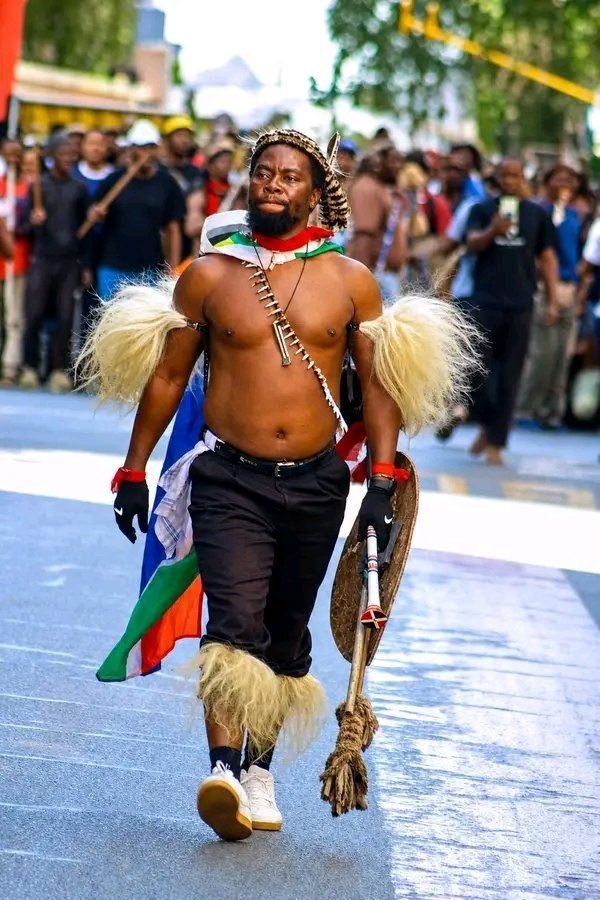
South Africa’s ongoing xenophobic attacks against fellow Africans and people of Black descent are deeply unsettling. While some may describe the situation as unprecedented, it is, in reality, part of a troubling pattern that has persisted since the country’s transition to democracy in 1994. Major outbreaks, such as those in May 2008, and recurring waves of violence between 2015 and 2019 have left many dead and hundreds of thousands displaced.
The spectacle of Black communities turning against one another on a continent that is largely their shared home is both tragic and difficult to reconcile. It stands in stark contrast to the aspirations of earlier generations, who envisioned unity among Africans and solidarity with people of African descent worldwide. Decades later, that vision feels increasingly distant.
These attacks are often fueled by a small but vocal group of agitators who misdiagnose the root causes of their socio-economic struggles. Whether driven by misinformation, frustration, or deliberate political manipulation, their actions undermine the broader goal of African unity and cooperation.
South Africa hosts just over three million immigrants—significant within the continent, but modest compared to global standards. Countries in the Middle East, such as Qatar, the United Arab Emirates, and Kuwait, have foreign populations that exceed their local citizenry. Similarly, nations like Germany and the United States host far larger immigrant populations than South Africa.
Despite this, immigrants in South Africa are frequently blamed for a range of societal problems, including crime, drug abuse, unemployment, and pressure on public services. However, much of this narrative does not hold up under scrutiny. Crime statistics, for instance, show that immigrants account for only about 2–4% of the prison population, despite making up roughly 5% of the total population—suggesting they are not disproportionately responsible for criminal activity.
Economically, migrants play a meaningful role. They contribute approximately 9% of South Africa’s GDP, create jobs, and often pay more in taxes relative to their use of public services. Many migrants are highly motivated, working diligently to build better lives, which in turn supports economic growth.
That said, migration is not without challenges. Increased population can strain infrastructure that was not designed to accommodate rapid growth. Competition in the labor market may also exert downward pressure on wages in certain sectors, and social tensions can arise when resources are perceived as limited.
However, these challenges must be weighed against the broader benefits. The evidence suggests that migrants are, on balance, a positive force in South Africa’s economy and society. The persistence of xenophobia appears less about facts and more about perception—often shaped by leaders who deflect attention from systemic issues such as inequality, unemployment, and poor governance.
Instead of scapegoating immigrants, South African politicians, public figures, and citizens must confront the deeper structural problems facing the country. Addressing inequality, improving service delivery, and fostering inclusive economic growth are far more effective solutions than assigning blame to vulnerable populations.
Ultimately, the path forward lies not in division, but in confronting shared challenges with honesty and a renewed commitment to unity.